Robert Kaplan's NYT op-ed today is infuriating on a number of levels. Kaplan argues that the United States and a number of our European allies should consider mounting an invasion of Burma. He concedes that once such an an operation is mounted, the regime might fall so we should also be prepared to impose security afterward. Kaplan acknowledges that a Security Council resolution authorizing an invasion would likely be shot down by the recalcitrant Chinese, but proposes we send a coalition of the willing anyway.
No problem with that, right? It's not like American forces are already fighting two costly wars. As for the Europeans, I foresee two problems. One, it's a big step to think that the Europeans will circumvent the Security Council. They take international law very seriously. Second, European forces are also bogged down around the world in Iraq, Afghanistan, Chad and Lebanon. Fact is, most European (and Commonwealth) governments are under strong domestic pressure to scale back their military commitments oversees. A new "coalition of the willing" for Burma is basically a non-starter.
Also bothersome about the piece is that he believes the fantasy that we can just airdrop food and humanitarian assistance to the affected areas. This is just not so. Without intelligence on the ground (i.e. where to drop the relief) and a ready-to-go distribution mechanism, airdrops can do more harm than good. The strong will fight off the weak and people with guns will sell the relief on the black market. The aid will not go to the people who need it most.
Yes, we do have a moral obligation to help the suffering Burmese. The way to fulfill that obligation is not to froth at the mouth for toppling another odious regime, but by working diplomatic channels to force the junta to relent their obstruction of humanitarian relief efforts. This may mean taking a harder line with China over its support of the junta. It certainly does not mean we need to ready the gears of war to invade and occupy the country. That, frankly is a distraction and counterproductive to first imperative of helping those in danger.
UPDATE: Robert Farley has a couple of thoughts on the wisdom and utility of invading Burma.
From the UN News Center:
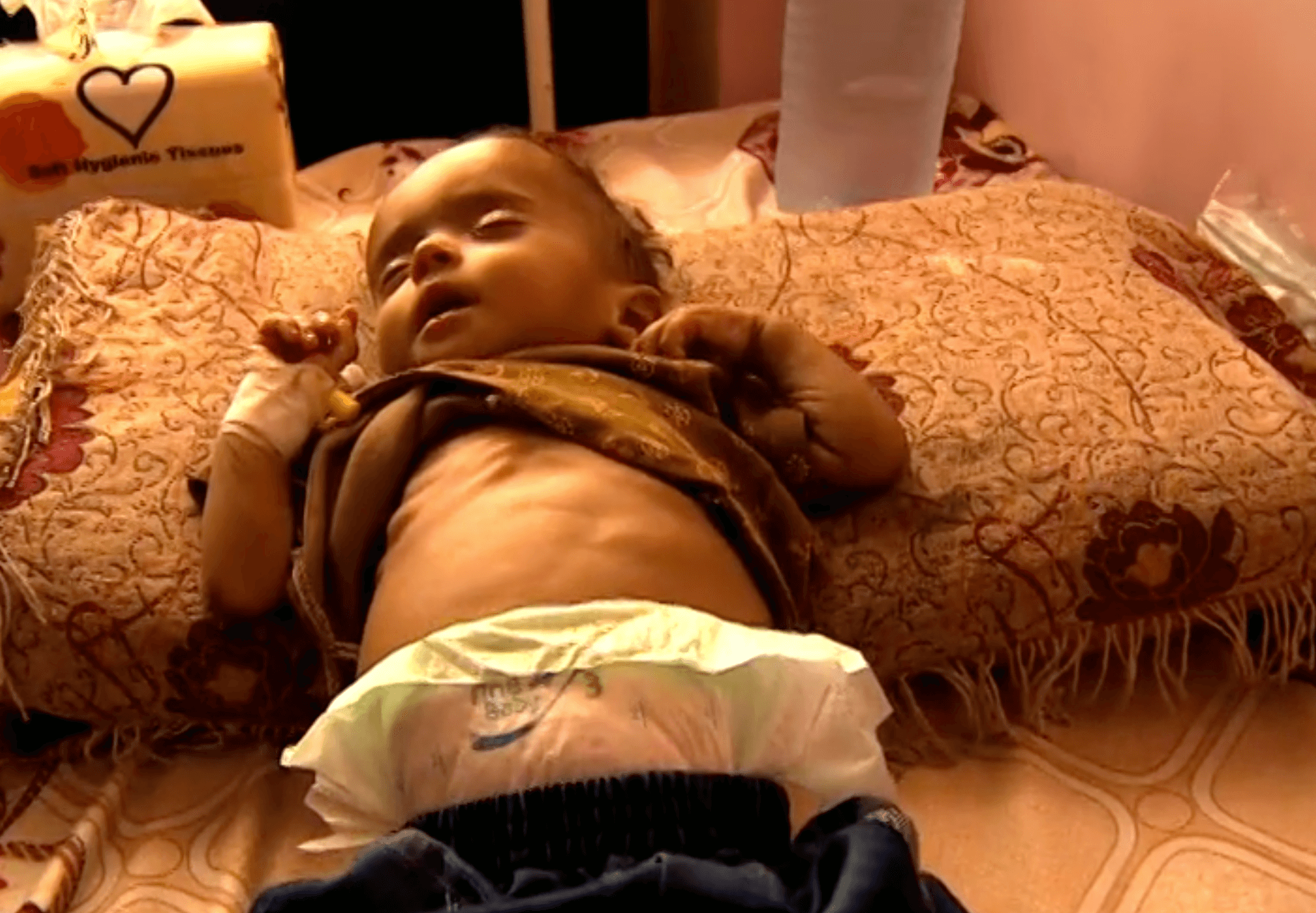
Unless more access to Myanmar is granted to allow aid to flow more quickly to victims of this month's deadly cyclone, a second catastrophe could result, the United Nations Office for the Coordination of Humanitarian Affairs (OCHA) warned today.Read more. Emphasis mine.Despite some progress, efforts to help the 1.5 million people affected by Cyclone Nargis must be enhanced, a spokesperson for OCHA told reporters in Geneva.
Elizabeth Byrs said that, some 12 days after the cyclone struck, the UN and its partners have reached about 270,000 at-risk people, less than a third of those affected. Heavy rains have been forecast, further impeding aid efforts. Ms. Byrs called for an air and sea corridor to channel aid in large quantities as quickly as possible.
The official death toll reported by Myanmar's Government has reached almost 32,000, with over 34,000 others missing.
>>Myanmar - Aid workers in Myanamar are concerned that even the small amount of aid they have been able to get to the capital is not being delivered it to its intended destination, a duty that the military junta has reserved for itself. The British Perm Rep to the UN has received unconfirmed reports that aid is being redirected away from victims. Meanwhile, the junta is still blocking large-scale aid drops and has refused U.S. offers of assistance, as well as those of China, Bangladesh, Singapore, and Thailand. Over 11,000 U.S. troops are in Thailand conducting a military exercise. Also, on Monday Doctors Without Borders was ordered out of the Irrawaddy Delta, and less than half of the visa applications for UN relief officials have been processed.
>>Middle East - President Bush landed in Tel Aviv this morning, to begin a five-country, three-day tour of the Middle East. He has already met with President Shimon Peres and Prime Minister Ehud Olmert and plans to meet with Mahmoud Abbas later in the week at Sharm el-Sheikh. The trip coincides with the 60th anniversary of Israel.
>>Colombia - Colombia extradited 14 paramilitary leaders to the U.S. yesterday, an unprecedented action at a time when Colombia is hoping for a trade deal with the U.S. The men will face drug-trafficking charges. Such extraditions are controversial in Colombia and among the human rights community as the prisoners will only serve time for breaking U.S. law not atrocities committed in Colombia. Though they may end up spending more time in jail in the U.S. and, after extradition, are less able to command their networks, which has been a major problem when they were held in Colombian prisons.
- California Gets Clarity
- The Matthew Yglesias Interview
- Boston Globe: The United Nations Can Save Burma
Want a more thorough update? Sign up for UN Wire.
See the "Rest of the Story"
Look out hybrid owners, there's a new eco-car in town. This Summer, Honda will release its new "FCX Clarity" hydrogen fuel cell vehicle for lease in parts of Japan and Southern California. It boasts improvements over older models, including a much smaller fuel cell that gives the car ample interior space as well as a lithium ion battery to store excess energy for later use and improve the car's overall efficiency. In case you haven't heard of this technology, the fuel cell basically mixes hydrogen and oxygen to create water and uses the energy from that process to power the vehicle. So the vehicle's byproduct, rather than CO2, is a much friendlier 2-letter 1-number combination: H2O.
The reason the car is being released in such a limited capacity is because the car doesn't use gasoline, so in order to refuel it, you need special refueling station. In parts of Southern California, Honda has created a "home energy station" that would put your gauge back on "F" while the car is in the garage. And though it would be quite cool to always set out on the open road with your car already fueled up, these stations produce hydrogen using natural gas, which is less than ideal. For now, hydrogen refueling stations are not widespread in the United States, but given high gas prices and the fact that the car itself zero emissions and--in my opinion--pretty sporty, maybe they will be soon.
Ivo Daalder and Paul Stares argue for Security Council action on Burma.
The United States and Britain should join with the French government and introduce a resolution in the UN Security Council demanding that the Burmese government immediately allow the entry of international relief supplies and personnel into the country and allow the UN to take charge of the relief mission. To make the case, Washington should show detailed imagery of the suffering and the extent of devastation in Burma (as it did so effectively in the cases of Bosnia and Darfur to shock a disbelieving United Nations).I completely agree with the sentiment expressed, but the authors do not address the tricky question of what happens to the relief after its been airdropped. As a number of UN aid officials have warned, simply dropping in supplies without setting up proper distribution mechanisms can be as dangerous as not dropping in supplies at all.The resolution should hold open the possibility of additional measures - including air drops of relief supplies - if the government did not comply at once. And the Security Council could commit to return to the matter in 24 hours, assess Burma's response, and consider additional actions.
Their broader point, though, makes sense. Taking this to the Security Council could help pressure to the junta so that they do cooperate with relief efforts. They key here is China. Should Beijing lend its support to a Security Council measure demanding the junta cooperate with UN relief agencies, we may just see the junta budge.
>>Iraq - Violence flared again in Sadr City yesterday, as U.S. troops were attacked by who are thought to be supporters of Moqtada al-Sadr. These attacks put into question the agreement reached on Saturday between the government of Iraq and Sadr to end fighting and the amount of control that Sadr has over his supporters.
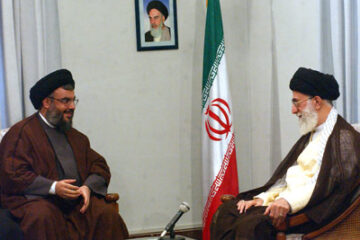
>>Lebanon - Yesterday, as violence eased across Lebanon, the Lebanese Army, long seen as a neutral institution, said that it would begin to use force to stop fighting between government supporters and Hezbollah. The army remains deployed to the mountains east of Beirut and northern Lebanon as part of an agreement for them to take over militia positions and collect arms. Reportedly, some government supporters are beginning to distrust the army because it did not stop Hezbollah from seizing control of western Beirut on Friday.
Want a more thorough update? Sign up for UN Wire.
See the "Rest of the Story"
Apparently, in the new Iron Man blockbuster, Robert Downey, Jr. is fighting off villains to defend the United Nations. (To which I joke: checking the IMDB page, though, I don't see Cliff Kincaid or Phyllis Schlafly on the cast roster.) From the Guardian, via All America Blog.
It's nothing new that Iron Man, the latest in Marvel's pop-icon pantheon to hit the big screen, is coming to the rescue of the United Nations. In a specially customised comic book, Ol Shellhead and his costumed cohorts will battle that most terrible of supervillains, a tarnished public image, by demonstrating the UN's positive, proactive roles. Will it work? It's debatable: over the years these earnest, message-laden stories have not always been too effective as weapons of mass persuasion.Hmm...considering the peacekeeping's troubling capacity shortage, consider me all for resurrecting The Higher United Nations Defence Enforcement Reserves.[snip]
As for the UN, superheroes have come to its rescue before. In November 1967, The Justice League Of America featured the UN symbol on the cover of issue 57, in a very right-on plea for racial harmony called "Man, The Name is - Brother!" The UN even had their very own team of superheroes devised by Wally Wood for Tower Comics in the 60s. Called the THUNDER Agents (The Higher United Nations Defence Enforcement Reserves), they were led by Dynamo, dressed in the UN's blue and white colours. Rather than relying on Marvel's characters, the UN could have resurrected this team, but THUNDER Agents vanished after only 20 issues and only aging comic collectors remember them now.
One of the original co-authors of the doctrine of the Responsibility to Protect weighs in on the debate over whether or not the situation in Myanmar warrants the invocation of R2P. Gareth Evans:
My own initial concern, and it remains a serious one, with Kouchner's invocation of the "responsibility to protect" was that, while wholly understandable as a political rallying cry - and God knows the world needs them in these situations - it had the potential to dramatically undercut international support for another great cause, to which he among others is also passionately committed, that of ending mass atrocity crimes once and for all.Read more.The point about "the responsibility to protect" as it was originally conceived, and eventually embraced at the world summit - as I well know, as one of the original architects of the doctrine, having co-chaired the international commission that gave birth to it - is that it is not about human security generally, or protecting people from the impact of natural disasters, or the ravages of HIV-Aids or anything of that kind.
Rather, "R2P" is about protecting vulnerable populations from "genocide, war crimes, ethnic cleansing and crimes against humanity" in ways that we have all too miserably often failed to do in the past...But here's the rub. If what the generals are now doing, in effectively denying relief to hundreds of thousands of people at real and immediate risk of death, can itself be characterised as a crime against humanity, then the responsibility to protect principle does indeed kick in. The Canadian-sponsored commission report that initiated the R2P concept in fact anticipated just this situation, in identifying one possible case for the application of military force as "overwhelming natural or environmental catastrophes, where the state concerned is either unwilling or unable to cope, or call for assistance, and significant loss of life is occurring or threatened".
>>Serbia - In Serbia's general election yesterday, the President's pro-EU party, the Coalition for a European Serbia, appears to have secured a surprising victory over the anti-EU nationalists, represented by the Serbian Radical party. The Coalition did not win an outright majority, and it is still unclear whether it will be able to form a government as many smaller parties may side with the Serbian Radicals. The Socialist party, formerly led by Slobodan Milosevic, made unexpected gains and could be crucial in forming the new government. Prior to the vote, analysts had predicted that international support for Kosovo's independence would be a boon for the Serbian Radicals.
>>Lebanon - Hezbollah gunmen clashed with pro-government Druze in the mountains east of Beirut, killing 36. Hezbollah fighters overran positions of those loyal to Walid Jumblatt in the Chouf mountains before an agreement was struck for the Lebanese army to deploy in the area. The violence over the last five days, the worst since the civil war of the 1900s, has caused the Arab League to send a delegation headed by Sheikh Hamad bin Jassim, the Qatari foreign minister, to help end the crisis.
- All Hail the Potato
- Here We Go Again
- Burmese Junta, Now Impounding Aid
- UN Envoy: Women's Rights Critical to Liberian Development
- Burma/Myanmar and the Responsibility to Protect
Want a more thorough update? Sign up for UN Wire.
See the "Rest of the Story"
In this segment of UN Plaza, Matthew Lee and I discuss the UN's response to the unfolding humanitarian crisis in Burma.

RSS


Del.icio.us